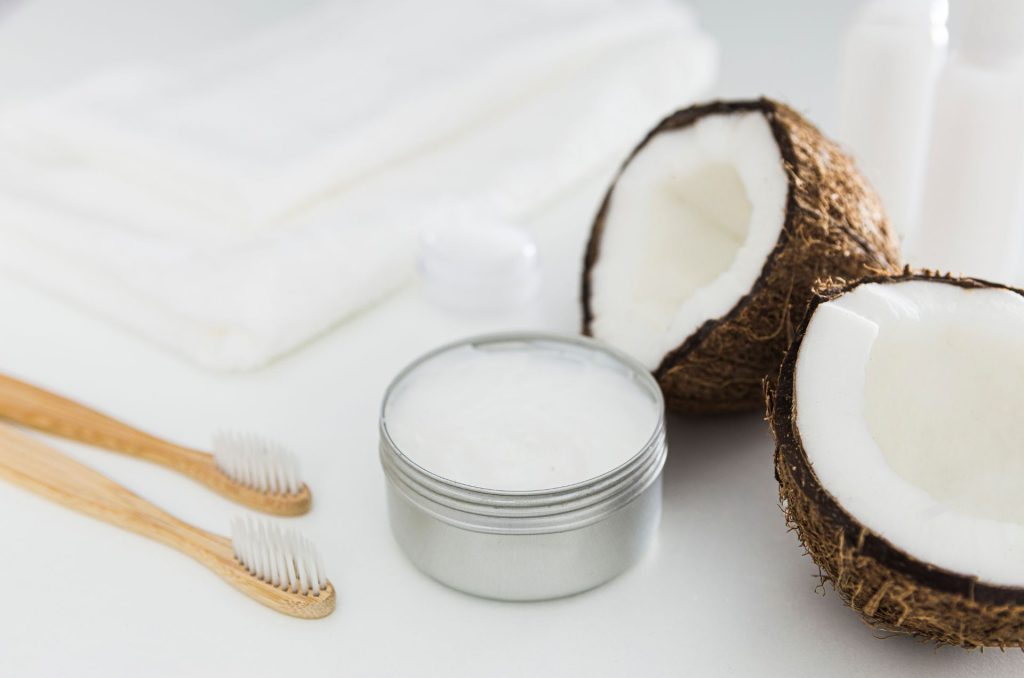

Have you ever stopped to read the ingredients in traditional toothpaste? Let’s see how many terms you can understand! As we look for more natural, chemical-free products, Using coconut oil to treat teeth is growing in popularity. No, this is not an Instagram fad. Its oral health properties are scientifically supported. Are you interested in learning about them?
Is coconut oil good to put on teeth?
Coconut oil contains interesting compounds that can lead to an enviable smile. What are there Properties of coconut oil For teeth?
- Antibacterial. This vegetable fat contains lauric acid. According to research, it is a fatty acid that has antibacterial properties and helps reduce oral bacteria, e.g. Streptococcus mutansIt is one of the most common factors behind tooth decay and enamel damage, or more serious problems such as periodontitis.
- Fresh breath. therefore, You can reduce some of the surface bacteria that cling to your mouth by swishing — or, as it’s more fancy, “oil pulling” — running oil throughout your mouth for a few minutes. This in turn combats bad breath, or bad breath.
- Moisturizing. But, beyond that, coconut oil’s moisturizing and healing properties can also help your gums. In fact, many people with inflamed gums find relief from using coconut oil on their teeth because it lubricates and has a mild sedative effect.
- Whitening. Finally, coconut oil is also believed to have a mild “whitening” effect that removes surface stains. It’s not a replacement for professional whitening, but in daily practice it can make your smile look a little brighter.
Contraindications of Coconut Oil for Teeth
While it sounds great, coconut oil isn’t right for everyone or every situation. here are some Contraindications What you should remember:
- Coconut allergy: Although rare, they do exist. If you notice itching, swelling, or any strange reactions, stop use immediately.
- Jaw problems or temporomandibular osteoarthritis: When you have these conditions, opening your mouth for 10 or 15 minutes may be uncomfortable or even painful. If this happens to you, talk to your dentist or physical therapist before trying it.
- It is not a treatment for advanced disease: If you suffer from moderate gingivitis, periodontitis, or tooth decay, coconut oil will not cure these conditions. It can accompany but not replace professional treatment.
- Aspiration risk: Do you find it difficult to control oil in your mouth? There is a slight risk of aspirating some liquid into the throat, which may cause coughing or discomfort. Do it calmly.
anyway, When in doubt, the wisest course of action is to consult your professional. Trustworthy. Always use it with common sense.
What happens if I brush my teeth with coconut oil every day?
On the other hand, you should know to use coconut oil daily to protect your teeth It is not a replacement for fluoride toothpaste or flossing.. If you limit yourself to rinsing or “brushing” with coconut oil and think that’s enough, you’re actually missing one of the pillars of oral health.
please note Unable to remove deep-seated plaquethe kind that sticks between teeth and in difficult places, like a fluoride paste combined with a good toothbrush. In other words, your risk of tooth decay may increase over time. imagine A complement to your hygiene routine, not a complete replacement.
How to use coconut oil to protect teeth?
If you convince yourself to try Coconut oil for teethhere are the steps to follow so you can do this safely:
- Choose a high-quality coconut oil: It’s better if it’s raw and unrefined, as it retains more of the beneficial compounds.
- Quantity and preparation: Take a teaspoon of coconut oil. At room temperature it is usually solid in the winter, but don’t worry as it will melt with the heat of your mouth.
- period: Apply the oil to your mouth for 10 to 15 minutes. Rather than chewing it like gum, gently move it over your teeth, gums, and tongue.
- Don’t swallow it: This is important. The oil contains bacteria and debris, so spit it out in the trash or on a paper towel. Do not do this in the sink to avoid clogging.
- Then brush your teeth regularly: After rinsing with oil, continue brushing normally with fluoride toothpaste and flossing, and don’t forget to get regular deep professional cleanings. For long-term dental health, this step is non-negotiable.
What kind of coconut oil is suitable for brushing teeth?
Did you know that not all coconut oils are equally suitable for oral use? when you think Coconut oil for teethlook for these requirements:
- virgin and thick: It keeps fatty acids intact and avoids residues from chemical processes.
- First cold pressing: This detail suggests less processing and more natural compounds.
- No additives or added flavorings: Any additional ingredients can irritate the gums or alter the oral microbiome.
A handy tip: Check the ingredient list. If you see anything other than “pure coconut oil,” think again. Quality matters because of a delicate purpose: your teeth. If you want an option It really combines quality and oral healthHispaniola coconut oil is an excellent candidate. It ticks all the right boxes for a coconut oil for teeth: it’s extra virgin, organic, and contains natural compounds that can help supplement your oral hygiene. Give it a try!
PakarPBN
A Private Blog Network (PBN) is a collection of websites that are controlled by a single individual or organization and used primarily to build backlinks to a “money site” in order to influence its ranking in search engines such as Google. The core idea behind a PBN is based on the importance of backlinks in Google’s ranking algorithm. Since Google views backlinks as signals of authority and trust, some website owners attempt to artificially create these signals through a controlled network of sites.
In a typical PBN setup, the owner acquires expired or aged domains that already have existing authority, backlinks, and history. These domains are rebuilt with new content and hosted separately, often using different IP addresses, hosting providers, themes, and ownership details to make them appear unrelated. Within the content published on these sites, links are strategically placed that point to the main website the owner wants to rank higher. By doing this, the owner attempts to pass link equity (also known as “link juice”) from the PBN sites to the target website.
The purpose of a PBN is to give the impression that the target website is naturally earning links from multiple independent sources. If done effectively, this can temporarily improve keyword rankings, increase organic visibility, and drive more traffic from search results.

